
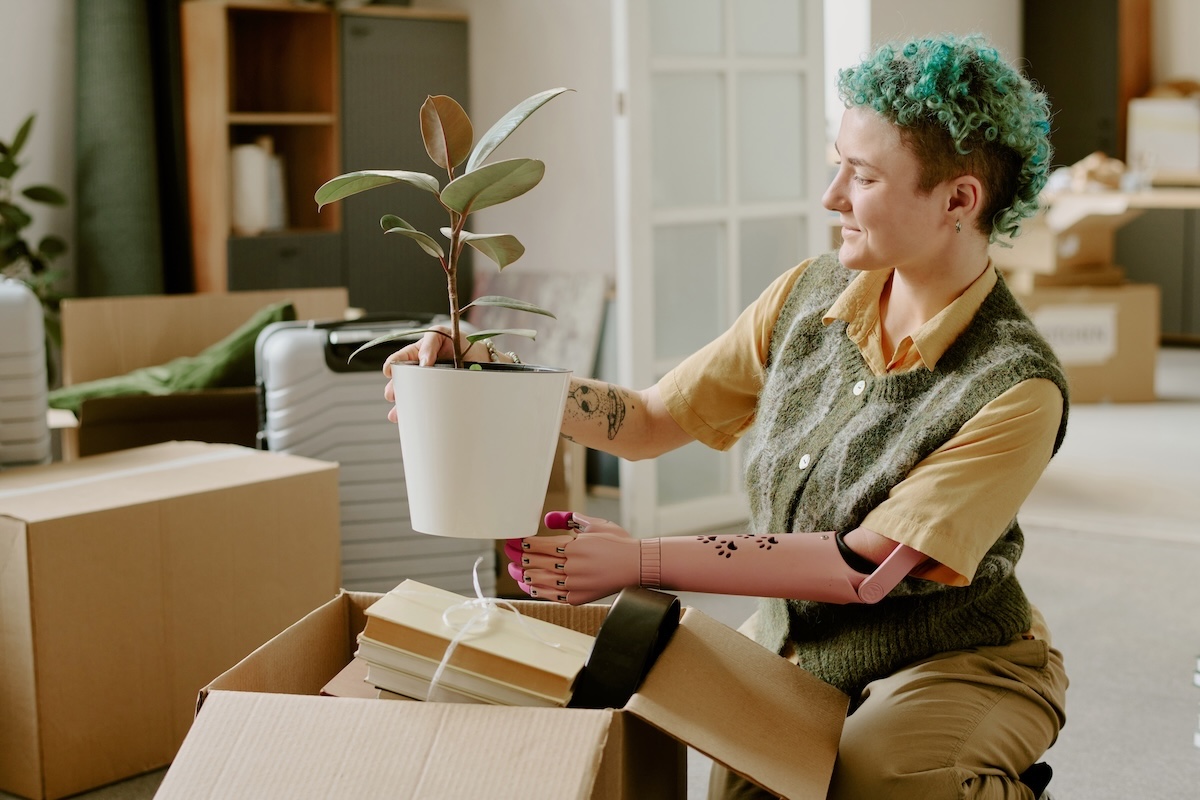
How to Transport and Care for Plants When Moving House
If you’re a proud plant parent, the thought of transporting your plants when moving plants probably fills you with dread. What if they get damaged in transit? How do you move them in the safest way? Will you need to enlist the help of trusted friends to sit in your passenger seat and hold onto them for the entire journey?
Luckily, most plants are more resilient than they look. With a little preparation, these worries can be quickly abated. That’s why Jack & Jill Removals have created this guide on how to keep your house plants as steady and comfortable as possible when moving house.
Start preparing your plants before moving day
It can be tempting to leave your plants until the last thing on the list, but giving them a little attention in advance will make moving day much easier.
Start by looking at your collection and working out which plants are going with you, which ones are too large or established to move easily, and which pots or containers need to be dealt with separately. It is also worth checking every plant for signs of pests before the move. You don’t want to arrive at your new home and discover that one plant has brought an unwanted guest along with it.
If your plants are particularly valuable, large, or delicate, this is also the time to speak to your removal company. Not all removals specialists will transport plants as part of a standard house move, so it is best to check rather than assume. Jack & Jill Removals can discuss the practicalities of your move with you and help you work out the best approach.
Check the weather before you move your plants
The weather matters more than you might expect when transporting plants. They can be perfectly happy indoors but the stress from spending too long in a cold van, a hot car, or direct sunlight can cause them to struggle.
You don’t need to panic if the forecast is less than perfect, but it is worth planning around it. Keep the trip as short as practical, protect plants while carrying them outdoors, and avoid leaving them sitting in a parked vehicle.
For winter moves, wrap delicate plants with suitable horticultural fleece or another breathable protective covering for the journey between the house and the vehicle. In summer, try to keep plants out of direct sun and never leave them sitting in a hot car.
Be careful with watering before the move
One of the simplest things you can do before moving plants is to think about when you last watered them. You might assume a generous watering before the move is helpful, but very wet compost makes plants considerably heavier and can increase the chance of water or soil spilling during transport.
Plant care specialists recommend allowing the soil to dry somewhat before moving, although the exact timing will depend on the plant and its normal watering routine.
You do not want a severely dry, wilting plant either. The point is simply to avoid moving a collection of heavy pots full of saturated compost. Check each plant individually and use a little common sense based on its usual care needs.
How to pack plants for moving
Knowing how to pack plants for moving is largely about keeping the pot stable and the foliage protected. You want each plant to arrive upright, without soil spilling everywhere or leaves being crushed against other belongings.
You should:
- Choose a suitable container: Use sturdy boxes or plastic crates for smaller plants, making sure they have a flat, stable base.
- Keep each pot upright: Position plants so the pot sits securely and cannot easily tip over.
- Fill gaps around the pot: Use scrunched up paper, cardboard, towels, or another suitable material to stop the pot from sliding around.
- Protect delicate foliage: If necessary, create a loose sleeve around the plant using paper or another breathable material. Avoid pressing leaves tightly against the plant.
- Keep plants separate from heavy items: Never put heavy boxes or furniture on top of plants or against fragile stems.
- Remove decorative pots where practical: If a plant is sitting inside a heavy ceramic planter, consider transporting it in its lighter nursery pot and wrapping the decorative pot separately.
- Check everything before loading: Make sure boxes are stable and nothing is likely to fall onto the plants during transport.
How to move large house plants
Large houseplants can be one of the trickier parts of a move. Tall plants can be awkward to carry through doorways and staircases and their leaves and stems are easily damaged if they are pushed into a space that is too small.
Before moving a large plant, take some time to work out the route it will need to take. Measure doorways if necessary, particularly if the plant is close to the maximum width of your entrance. It is much better to identify a problem beforehand than to discover it while carrying a large plant down the stairs.
You should:
- Measure the plant and access points: Check doorways, hallways, staircases and any narrow turns.
- Plan the route: Decide how the plant will leave the old property and enter the new one before moving day.
- Protect the foliage: Use breathable horticultural fleece or another suitable covering if the leaves are likely to catch against doorways or furniture.
- Support the pot from underneath: The weight should be carried by the base of the container rather than by the stems or leaves.
- Use two people where necessary: Large plants can be awkward and heavy, so having another person helps you control the pot and protect the foliage.
- Avoid unnecessary pruning: If a plant is particularly large, ask whether light pruning is suitable for that particular species rather than cutting healthy growth simply to make it easier to move.
- Secure the plant for transport: Make sure it cannot tip, slide or have heavy objects fall against it during the journey.
If you have a particularly large or delicate plant, tell your removals team before moving day so they can take it into account when planning the move.
Keep pots upright
Keeping plants upright is helpful for obvious reasons, but it can become more difficult with taller plants or smaller vehicles.
Make sure you:
- Check the compost is not excessively wet
- Secure the top of the pot if necessary using a breathable covering that helps contain loose compost without pressing against the plant
- Place smaller plants in sturdy containers with enough room to keep them upright
- Pad around the pots to stop them sliding when the vehicle moves or brakes
- Keep taller plants in a stable position where they are protected from being knocked over
Keep plants separate from heavy furniture
Plants should not be treated in the same way as ordinary boxes. A box can usually be stacked or placed around other items; your plants cannot.
When loading for the journey, make sure heavier belongings cannot fall against or crush them. Where possible, keep plants upright and in a protected area where they won’t be knocked over.
It is also sensible to keep them away from anything that could leak, topple, or shed dust and debris. A little thought about where plants are placed in the vehicle can prevent a great deal of avoidable damage.
Should you put plants in the removal van?
This is something to discuss with your removals company before moving day rather than making an assumption. Plants are delicate, awkward to stack, and can be affected by temperature, so some removal companies have their own policies about whether they can transport them.
Plant care specialists suggest that, where practical, people transport plants themselves because they can monitor them more closely.
If you are planning a larger house move and have a substantial collection of plants, tell your removals company in advance. That gives everyone a chance to agree on what is practical and how the plants should be handled.
Can I move garden plants?
Indoor plants are generally much simpler to move than established garden plants. Large, mature plants can have extensive root systems, making them difficult to dig up without causing significant damage. Whether a garden plant can realistically be moved will depend on its age, size, species, and how well established it is.
If you are hoping to take plants from your garden, it is worth getting advice from a horticultural specialist before you start digging. In some cases, taking cuttings or propagating a plant may be more sensible than trying to move a large established specimen.
Unpack your plants as soon as you arrive
Plants do not benefit from sitting in dark boxes for hours on end, so get them out of their packaging as soon as you have arrived and place them somewhere suitable.
You don’t necessarily need to decide where every plant will permanently live on the first day. A calm spot with reasonable light and no harsh direct sun can give them some time to adjust while you deal with the rest of the move.
Give your plants time to settle in
It is quite normal for plants to look a little unhappy after a move.
Try not to respond by immediately repotting, pruning, feeding, or moving them from room to room in search of the perfect position. Giving them a little time to settle can be more helpful. Avoid feeding, pruning, and repotting for a short period after a move so the plant can adjust to the new environment without additional stress.
Keep an eye on them, but don’t assume that a few dropped leaves or a tired appearance means the plant is doomed. Many plants recover perfectly well after a move once their new routine is established.
Liaise with your removals team
Alongside packing and prepping your houseplants, there are numerous things you need to think about on the day of your move. Luckily, with the right preparation and support, it doesn’t have to be stressful. At Jack and Jill Removals, we’re here to take the strain out of moving day so you can focus on the joy of starting fresh. Our Home Removals team has years of experience in smoothing over the moving process and making things as easy for you as possible. Once the boxes are unpacked and the kettle’s on, you’ll realise that all the effort was worth the hassle.